
Did you know that in 2025, nearly 73% of university students in Quebec are already using generative artificial intelligence for their studies? If this figure is impressive, note that it represents a marked increase from the 59% recorded in 2024. The KPMG Canada study, published in the fall of 2025, also reveals that, for 48% of the student community, the first reflex when faced with a task is now to turn to AI.
While student adoption is impressive, the institutional environment is at a crossroads. The integration of artificial intelligence into education is no longer a futuristic prospect but a reality that is redefining the very foundations of teaching.
For school principals and teachers, the stakes go beyond mere technological adoption. It's a strategic transformation aimed at improving student success and learning while making more effective use of already-stretched operational and human resources.
This article explores AI's real-world potential, ethical limitations and proven methodology for successfully transitioning to AI-enhanced education.
Why is AI Transforming Education Today?
While artificial intelligence has been around in laboratories since the 1950s, the real educational earthquake occurred in November 2022 with the launch of ChatGPT. In a few weeks, AI went from an abstract concept to a ubiquitous tool in digital school bags.
After an initial phase marked by concern about plagiarism, we have entered the era of utilitarian AI. Between 2022 and today, the discourse has shifted: the question is no longer whether to ban artificial intelligence from schools, but how to integrate it to overcome the systemic flaws of the education sector, which is facing a perfect storm:
- Resource shortage: The lack of teaching and support staff is overloading existing teams.
- Growing heterogeneity: Within the same class, differences in students' levels can represent several years of schooling.
- Need for flexibility: Modern students demand personalized learning paths that are accessible at all times.
AI in Education: From Theory to Practice
Far from science-fiction scenarios, artificial intelligence is now being deployed through concrete applications that respond to the day-to-day frictions of institutions. These technologies are opening doors for institutions wishing to combine academic excellence with operational efficiency. Here's how this transformation is playing out in the educational ecosystem.
Personalized Learning and Content Recommendations (Adaptive Learning)
AI in education can process massive volumes of data to deliver what was once impossible at scale: hyper-personalization. It's a real paradigm shift! Traditionally, education followed a one-size-fits-all model. With AI, data becomes a pedagogical ally.
By analyzing student data, such as performance, preferences and behaviours, AI systems can tailor content and teaching methods to meet the specific needs of each individual.
For example, platforms like DreamBox and Knewton use AI algorithms to personalize exercises and lessons based on students' abilities and progress. These systems can identify knowledge gaps and propose targeted activities to address them. As a result, students can progress at their own pace and focus on areas where they need the most improvement.
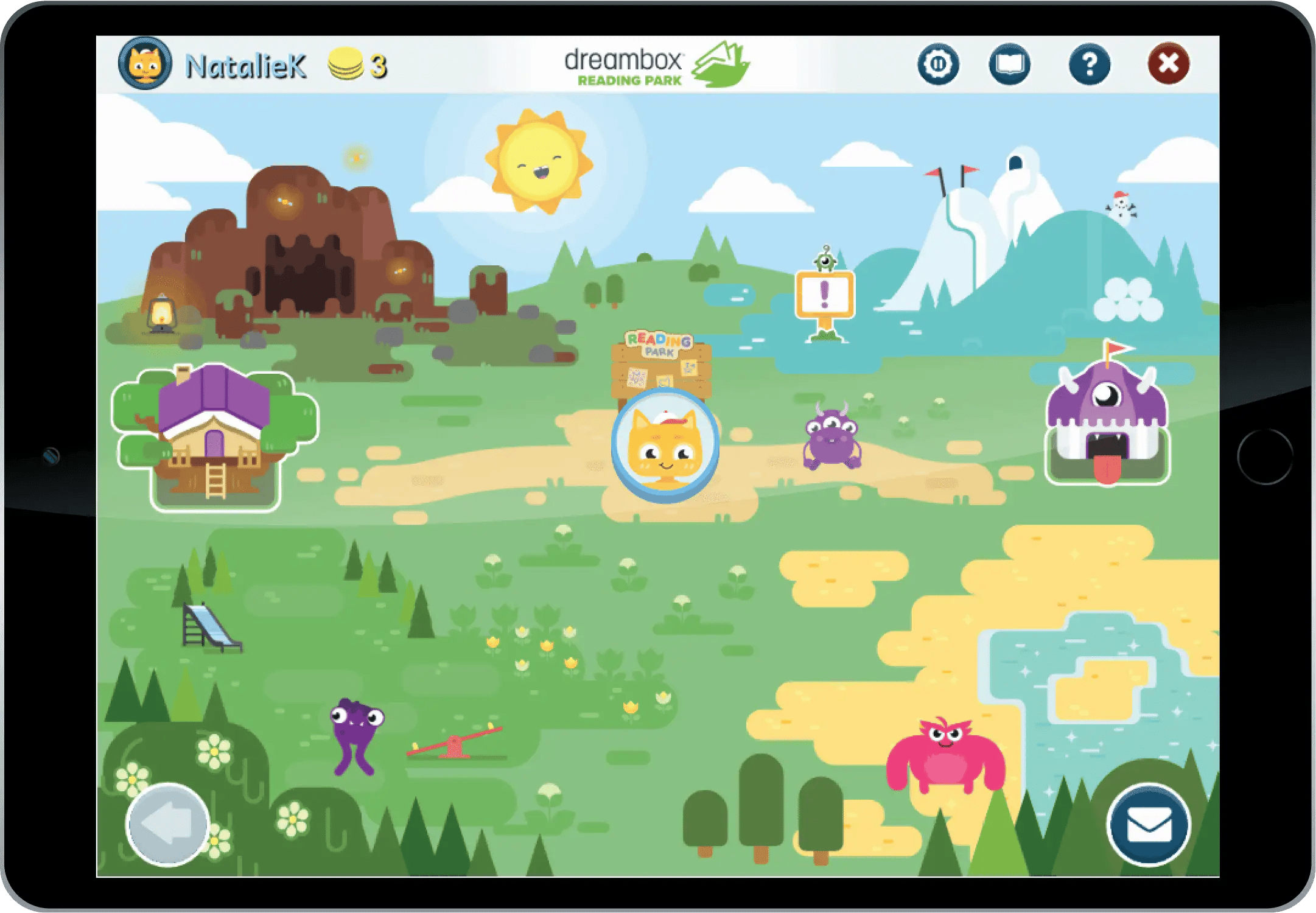
Personalized learning with AI is not limited to adjusting educational content. It can also include recommendations for additional resources, such as articles, videos and exercises specific to each student. What's more, AI can provide real-time feedback, enabling them to immediately identify and correct mistakes. This proactive, adaptive approach fosters a better understanding of concepts and a deeper mastery of subjects.
According to MIT, elementary school in China have begun using the Squirrel AI application, with impressive results: a significant increase in academic performance for students, as well as time savings for creative pedagogical activities and direct interaction with students for teachers.
Help in Creating Courses, Exercises and Assessments
Preparing high-quality teaching materials is one of the most time-consuming tasks for teachers. Generative AI in education changes this by acting as a "pedagogical co-pilot", capable of producing first drafts in seconds that the teacher can then refine.
What AI can generate in concrete terms :
- Lesson plans: Structure an entire semester or learning unit in line with the PFEQ(Programme de formation de l'école québécoise) competencies.
- Varied exercises: Instantly create ten variations of the same mathematical problem, or case studies tailored to students' interests.
- AI-assisted assessment and grids: Generate multiple-choice questionnaires or descriptive assessment grids based on specific learning objectives.
Several institutions and organizations are already integrating these tools. For example, the Wooflash platform is very popular at Quebec universities (such as UQAM) for transforming lecture notes into quizzes and flashcards, based on the principles of neuroeducation.

To remember: The aim is not to let AI write the course for the specialists, but to eliminate the blank page syndrome. A teacher who saves 5 hours of preparation per week is more available for his or her students.
AI Correction and Feedback
Correction is often perceived as the "dark side" of teaching. Integrating AI into this process is not intended to replace the teacher's judgment, but to automate repetitive tasks (e.g., spotting spelling mistakes and applying standardized scales based on requirements and the student's level) so the teacher can focus on high-value-added feedback. There are two types of AI-enhanced correction:
- Automated correction: Ideal for multiple-choice questionnaires or short answers, where the AI validates accuracy instantly.
- Assisted correction: For complex written work, the AI acts as a first reader. It identifies errors, suggests a grade based on a set of criteria, but leaves it to the teacher to validate or adjust each decision.
Quebec stands out for the development of local solutions adapted to the realities of our education system (notably the Ministry's correction grids):
- Nexam: Originating in Quebec, this ISO 27001-certified solution is used to secure online exams and centralize collaborative grading, while respecting data confidentiality.
- Examino: A tool for digitizing and correcting handwritten copies using character recognition (OCR) and semantic analysis.
- Emilia: An AI assistant designed specifically for teaching French. The student writes the text, and the AI performs a precise pre-correction based on the teacher's grid, thereby reducing correction time by up to 75%.
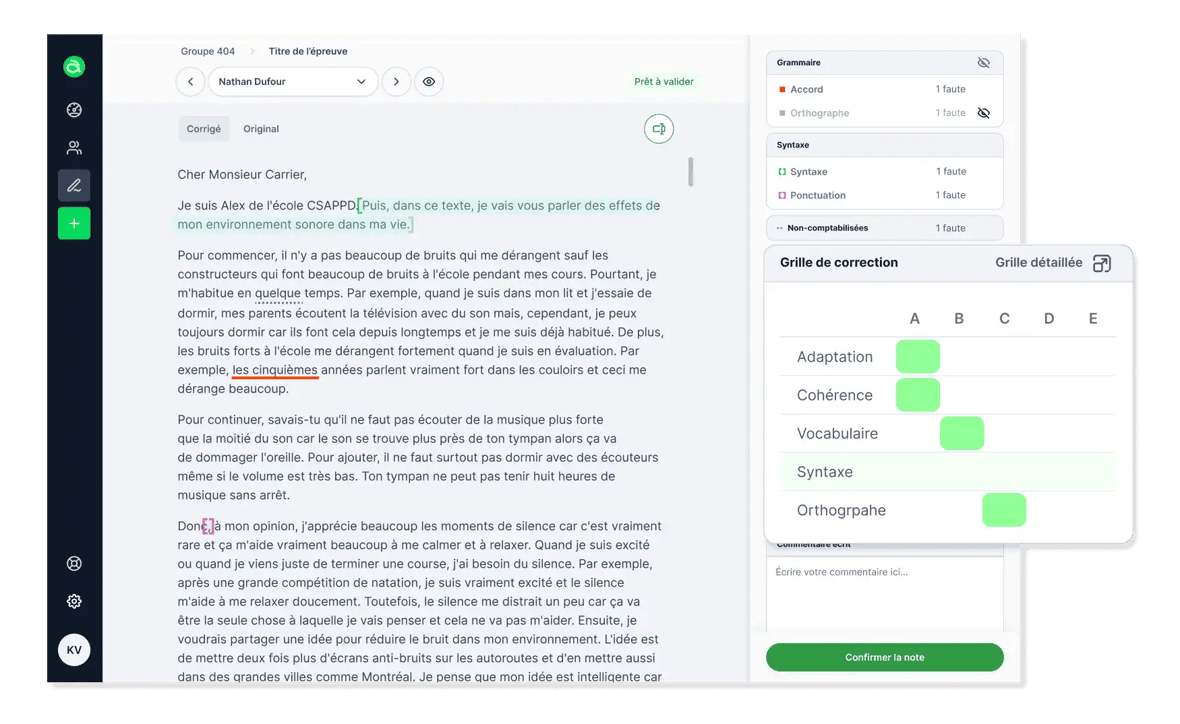
Beyond the time saved, automated or AI-assisted correction enables students to receive feedback almost instantaneously (rather than waiting several weeks), considerably accelerating their learning.
To remember: With a solution like Emilia, the teacher retains full control. The AI proposes; the human decides. It's the perfect synergy for more human, less administrative teaching.
Intelligent Tutoring/AI Assistants for Learners (Educational Chatbots)
One of the biggest challenges of traditional teaching is the asymmetry between when a student gets stuck on a concept (often in the evening, during homework) and the teacher's availability. Pedagogical chatbots and intelligent tutoring systems (ITS) act as a bridge, offering immediate, personalized support at any time of day.
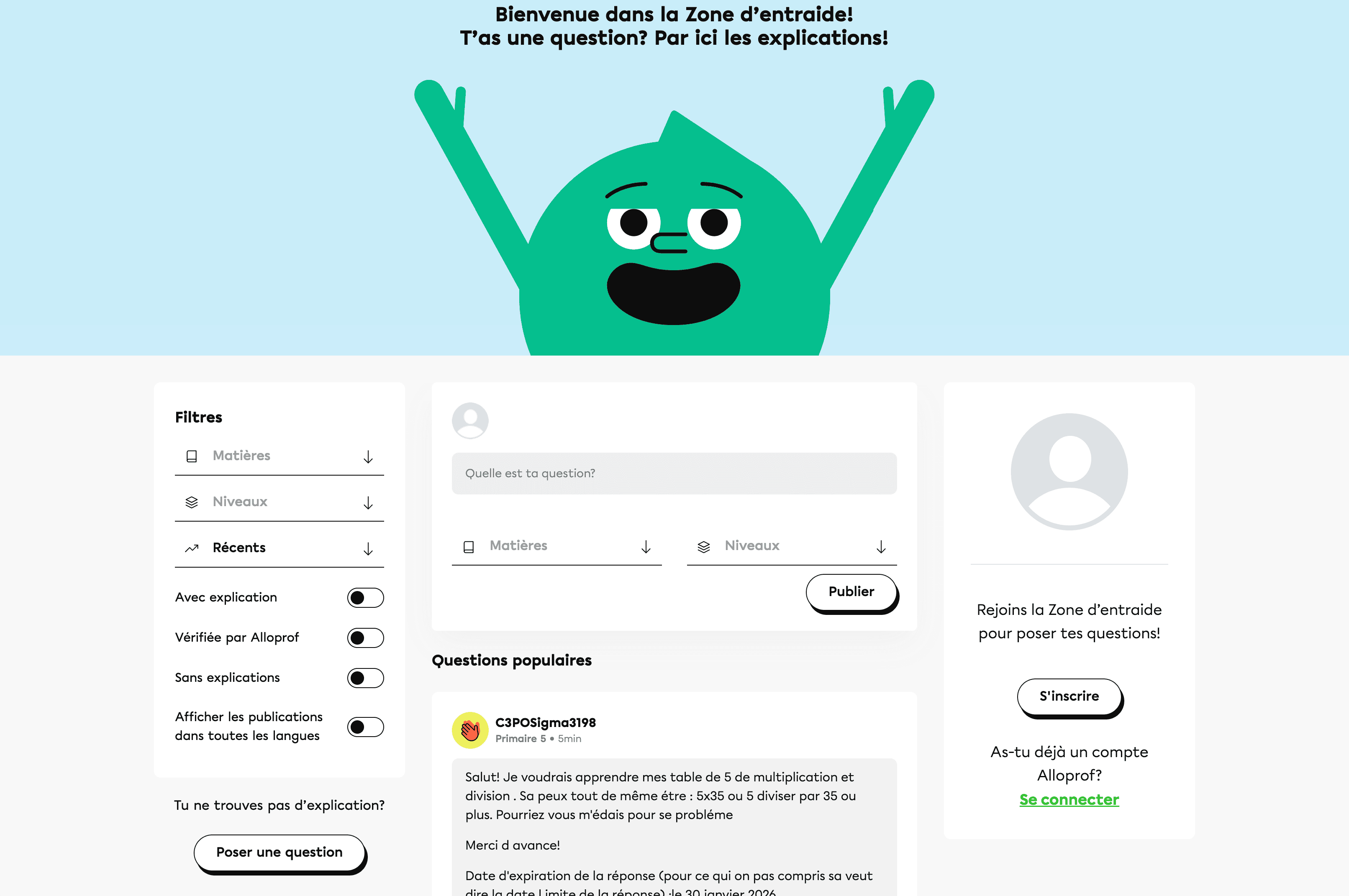
Quebec is a pioneer in integrating these intelligent assistants, with solutions that prioritize learner autonomy. For example, Alloprof has deployed a high-performance recommendation AI in its Zone d'entraide. When a student asks a question, an algorithm instantly analyzes the request to suggest the most relevant teaching sheets or explanations. This enables the student to make immediate progress while waiting for a human tutor to validate or complete the explanation.
Internationally, the Cogniti platform enables teachers to create personalized conversational agents that are directly integrated into their digital environments (such as Moodle or Canvas).
The strategic point of view: for a school manager, these assistants are not gadgets. They are retention tools. A student who finds an answer at 9 p.m. is a student who doesn't get discouraged and arrives in class the next day, ready to delve deeper into the subject rather than catch up.
Detecting Gaps and Dropouts, and Analyzing Learning Data (Learning Analytics)
One of the most powerful contributions of artificial intelligence to education is its ability to make the invisible visible. Thanks to Learning Analytics, educational institutions are no longer in reactive mode but in proactive prevention mode.
By cross-referencing data on absenteeism rates, grade history, engagement, and socio-environmental factors, AI enables the identification of "silent dropouts" well before the first failures are officially recorded. These tools do not judge the student; they alert professionals (psycho-educators, guidance counsellors) so they can intervene when the impact is greatest.
Quebec is a world leader in the use of AI for student retention:
- MEQ (Ministère de l'Éducation) national solution: Inspired by a pioneering CSS du Val-des-Cerfs pilot project, the ministry is currently rolling out an AI solution dedicated to dropout prevention to all school service centers. This tool analyzes multidimensional variables to help principals target vulnerable students as early as the end of primary school.
- DALIA (Omnivox): Integrated into the Omnivox system used by most CEGEPs, DALIA AI provides success indicators for education professionals and acts as a digital safety net for student cohorts.
The challenge for managers: Implementing these systems requires great ethical rigor. Success depends on data governance, as well as transparency towards parents and students.
Administrative Automation (Registration, FAQ, Support)
If the impact of AI in the classroom is spectacular, it is equally so in the administrative offices of educational establishments. Enrolment management, technical support, and repetitive questions from parents or students often saturate teams, especially during peak periods. Administrative automation enables the transformation of these bottlenecks into fluid, 24/7 processes. Here are just a few examples:
- Dynamic FAQs and support: Instantly answer questions on deadlines, admission criteria or graduation procedures.
- Records processing: Use intelligent document recognition to sort, validate and extract data from registration forms or external transcripts.
- Schedule management: Optimize room and time-slot allocation to meet the complex constraints of teachers and students.
To remember : In addition to saving time, administrative automation reduces manual input errors and ensures fair treatment: every request receives a consistent, rapid response, reinforcing the school's reputation for efficiency.
The Benefits of Artificial Intelligence for Students
Artificial intelligence has the potential to significantly transform education, delivering considerable benefits to students. The impact of AI in schools is first measured by student success.
- Personalized learning paths: Each student progresses at their own pace, thanks to content that adapts in real time to their strengths, reducing anxiety and feelings of failure.
- Improved follow-up and success: Predictive analytics identifies gaps before they become obstacles, enabling targeted interventions that secure the academic path.
- 24/7 student support: Intelligent tutors offer immediate help during homework or revision periods, eliminating frustrating blockages outside class hours.
- Answers to frequently asked questions: Virtual assistants instantly handle administrative and logistical queries, allowing students to concentrate fully on their learning.
- Accessibility and inclusion (DYS, language, disability): Transcription, text-to-speech and text simplification tools break down linguistic and cognitive barriers to ensure equitable access to knowledge for students with special needs.
- Enhancing motivation through technology: Interactive interfaces and immediate feedback transform learning into an engaging, rewarding experience, improving student retention. What's more, these interactive tools can make abstract concepts more concrete and easier to understand.
The Impact of AI on Schools and Teachers
The introduction of AI in education also has a significant impact on teachers and administrative staff. For managers, AI is a lever for operational efficiency:
- Pedagogical impact: Dashboards provide a real-time view of engagement, completion rates and skill progression, helping to guide teachers' pedagogical decisions and personalize their approaches to meet students' individual needs.
- Operational impact: The automation of repetitive tasks generates major time savings, reducing work overload, processing times and administration costs.
- Impact on quality: Standardization and universal access to resources ensure greater pedagogical consistency and higher satisfaction among students and their parents.
In the field, AI isn't just another gadget: it's a new way of working. Here's a quick comparison to see how AI "augments" the traditional model:
|
Dimension |
Traditional teaching |
AI-enhanced teaching |
|
Correction time |
High Several hours (even days or weeks) per exam. |
Optimized Up to 75% reduction in correction time thanks to tools like Emilia. |
|
Personalized learning |
Limited Pace imposed on the group. Difficult to adapt content to 30+ different profiles. |
Hyper-customization Content and exercises adjusted in real time to each student's cognitive profile. |
|
Feedback to the student |
Deferred Often received 1 to 2 weeks after the task, it loses its pedagogical impact. |
Instant Immediate feedback essential for anchoring knowledge. |
|
Risk detection |
Reactive We intervene after an exam has been failed or when report cards are handed in. |
Proactive Early detection of drop-out signs thanks to Learning Analytics before failure. |
|
Availability of support |
Limited Depends on class hours or availability of human tutors. |
24/7 Constant access to an AI assistant to answer questions and eliminate blockers. |
|
Administrative burden |
Heavy Manual data entry and FAQ management. |
Light Automation of data flows and first-level communications. |
To remember : For educational institution managers, AI is a lever for operational efficiency, academic success and staff retention.
Artificial Intelligence Tools Used in Classrooms
Many artificial intelligence tools are now being used in classrooms to enhance the learning experience. Here is a list of some of the tools available:
AI Tools for Students: Supporting Learning and Autonomy
- Khanmigo: A personal tutor who uses Socratic questioning to guide students to the solution without ever giving them the answer directly.
- Speechify: Transforms lecture notes and PDF textbooks into high-quality audio, ideal for mobile study or to support students with learning disabilities (DYS).
- Consensus: A search engine that uses AI to find answers based solely on peer-reviewed scientific studies, avoiding hallucinations.
- Antidote: Helps rephrasesentences and improve writing clarity while checking for plagiarism and grammar.

AI Tools for Teachers: Reducing the Load and Personalizing Learning
- Curipod: Creates interactive lessons in seconds: you enter a topic, and the AI generates polls, drawings and activities for the class.
- Gradescope: Facilitates the correction of handwritten or digital copies by grouping similar answers, ensuring faster and more uniform grading.
- MagicSchool.ai: An all-in-one platform for generating lesson plans, e-mails to parents, progress reports and ideas for educational differentiation.
- AudioPen: Converts the teacher's voice reflections into clear, structured text, perfect for taking quick teaching notes between classes.
Limits and Concerns Linked to the Use of AI in Education
Despite the many benefits of artificial intelligence in education, there are also major challenges and concerns to consider. For educational managers, the success of a technological shift depends on their ability to anticipate and mitigate the risks associated with AI in schools.
Plagiarism, Cheating and Academic Integrity
The arrival of generative AI in education has upended traditional assessment methods. The risk of plagiarism or cheating is real, but above all, it forces a necessary reflection: how can we evaluate the process (thinking and learning) rather than the product (submitted work)? Schools need to redefine their criteria to value critical thinking, originality and verification of sources.
Bias and Fairness
Artificial intelligence models are not "neutral" by nature. They learn from historical data that reflects our society's inequalities and biases. If these data are biased, AI will not only reproduce these errors but also amplify them. For example, a dropout detection algorithm could, if poorly designed, stigmatize certain student groups.
Hallucinations and Reliability of Answers (Generative AI)
Language models are not search engines, but probability engines. They can generate "hallucinations", i.e. assert erroneous facts, invent sources or quote inaccurate historical dates with disconcerting confidence. In an educational context, this poses a significant risk of misinformation if the learner lacks the necessary knowledge to question the tool's response.
Tool Dependency and Loss of Critical Thinking Skills
The systematic use of AI to synthesize texts or solve problems can lead to the atrophy of certain essential cognitive abilities. If the student delegates the thinking phase to the machine, they risk never developing the mental structures necessary for deep understanding. The challenge is to move from passive use ("give me the answer") to active use, in which the student validates, critiques, and improves the AI's work. It's also important to teach AI literacy: knowing when to use it, how to question it and when to dispense with it.
Security, Confidentiality and Content Ownership
One of the main concerns is data confidentiality. AI systems collect and analyze large amounts of data on students, including their academic performance and behaviour. It is essential to ensure that this data is protected and used ethically, in compliance with privacy laws.
In Quebec, compliance with Bill 25 is non-negotiable. The use of third-party tools raises crucial questions about data sovereignty:
- Where is student data stored?
- Is it used to drive business models?
A leak of personal information can have serious legal and reputational consequences for an educational institution.
Change Management
Despite its benefits, integrating AI into education also poses challenges for teachers, including the need to familiarize themselves with new technologies and to train in their use. Teachers need to acquire skills in managing AI tools and interpreting the data generated by these systems.
Digital Divide and Equity of Access
Another challenge is unequal access to AI technologies. Not all educational establishments have the resources needed to integrate AI tools into their programs. This disparity can widen the gap between students with access to advanced technologies and those without. It's crucial to make AI technologies more accessible and affordable for all schools and students to avoid exacerbating existing inequalities.
Outside schools, AI also risks creating a two-speed education. On the one hand, students with access to the faster, higher-performance paid versions (e.g. GPT-4o, Claude Opus); on the other, those limited to the free versions or without a stable connection at home. Without institutional intervention to provide equitable tools, AI could become a vector for increasing social inequalities rather than a lever for democratization.
Risk of Dehumanization
Education is first and foremost a relational act based on empathy, encouragement and social ties. Over-reliance on virtual tutors and digital interfaces risks reducing the human interaction essential to motivation. AI must be viewed as a complement that frees teachers from mechanical tasks, allowing them to focus fully on the emotional and pedagogical support of their students. Maintaining a balance between AI and human interaction is essential to ensure high-quality education.

How to Deploy Artificial Intelligence in Education
To avoid the pitfalls of pilot projects that run out of steam before going to scale, Nexapp recommends deploying artificial intelligence with a proven approach, focused on the best opportunities and return on investment.
1. Clarify the Strategic Objective
Don't deploy AI to follow a trend. Technologies such as artificial intelligence are additional tools for solving specific organizational challenges or seizing opportunities for improvement. Identify your priority:
- Pedagogical: Improve student retention and success.
- Operational: Reduce the administrative burden on staff.
- Experiential: Offer personalized learning on a large scale.
2. Choose the Priority Use Case
It's tempting to want to automate everything at once. But success depends on selecting an initial project with high added value and low complexity.
-Feb-09-2026-08-51-47-0546-PM.png?width=1180&height=687&name=Nexapp%20blogue%20header%20(2)-Feb-09-2026-08-51-47-0546-PM.png)
Need help identifying your best opportunities?
Nexapp's opportunity sprint is designed to identify where AI will generate the most value quickly.
3. Select a Tool or Build Custom
To solve your problems or seize your opportunities, you have two options:
- The generic tool (SaaS): Quick to deploy, but often limited by confidentiality issues (Law 25) and rigidity with regard to your internal processes. They tend to generate localized gains for an individual or a team.
- Customized solutions: They offer a much higher return on investment and are built specifically for your field's needs, becoming a proprietary asset for your institution. They change how work is done at scale to benefit the entire organization.
4. Train, Support and Iterate
AI is a human tool. Change management is the #1 success factor.
- Coaching: Don't just hand out software licenses to your teams; train your teachers to become "AI pilots".
- Feedback loop: Gather feedback from users (teachers and students) in the first few weeks to fine-tune the tool. AI must evolve with the classroom, not the other way around.
Emilia Case Study: AI Cuts Correction Time by 75%
To understand how AI can concretely transform an educational institution, we need look no further than the Emilia project, a solution born of close collaboration between Nexapp and Collège Sainte-Anne. This project is a perfect illustration of how tailor-made technology can solvemajor human and pedagogical challenges.
The Challenge: Giving Time Back to French Teachers
Teaching French relies on frequent feedback. However, correcting written work is one of the heaviest and most time-consuming tasks for teachers. The challenge was how to reduce this workload without sacrificing the quality of pedagogical support or the rigour of assessment.
The Solution: an Intelligent Correction Assistant
Unlike ChatGPT or Antidote, Emilia is specifically designed to analyze texts against the criteria of the Quebec educational system.
- Automated pre-correction: Emilia analyzes student work and proposes an initial correction (spelling, syntax, structure) based on the teacher's specific grid.
- The teacher's added value: The teacher acts where he or she has the greatest impact, i.e. by validating, adjusting or enhancing the AI's suggestions according to the notions learned in class, thus retaining full pedagogical control, and comments on the student's text to provide near-instant feedback.
The results observed at Collège Sainte-Anne speak for themselves:
- Time savings: up to 75% reduction in correction time for French teachers.
- Quality of teaching: The freed-up time is reinvested in individual coaching and the preparation of more creative lessons.
- Student engagement: Acceleration of the learning curve thanks to feedback when the student is still immersed in the text, rather than two weeks later.
The future of education with Artificial Intelligence
The future of education with artificial intelligence is promising and opens up many possibilities. As AI technologies continue to advance, we can expect even more advanced innovations in education.
Educational Metaverse and Virtual/Augmented Reality
AI could play a key role in creating interactive, immersive educational content. Augmented and virtual reality technologies will continue to advance, offering more engaging and realistic learning experiences, while educational metaverses will enable immersive simulations that are impossible in the real world.
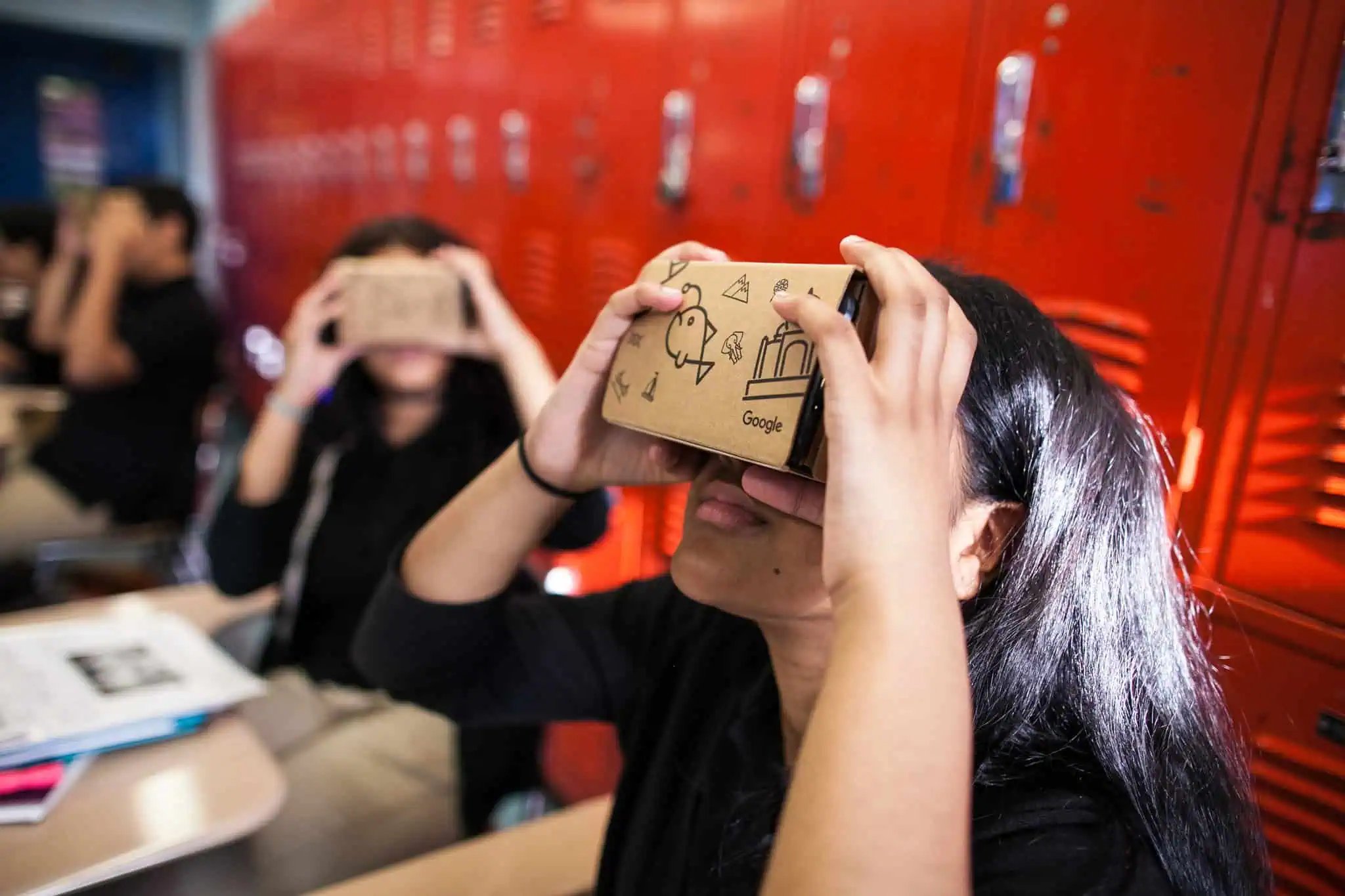
For example, Google Expeditions is a virtual and augmented reality tool that enables teachers to take their students on immersive "virtual journeys", such as exploring space or historical sites. This technology transforms theoretical learning into a memorable 3D visual experience, facilitating understanding of complex concepts without leaving the classroom.
Emotional AI
The evolution of AI in education extends beyond cognitive abilities. Tomorrow, emotional AI will enable a new stage: detecting and responding to a student's frustration, discouragement, or boredom in front of their screen. If the AI detects signs of fatigue or confusion (via analysis of pause times, typing speed, or facial expressions, with consent), it can suggest a break, simplify the language, or offer a more playful example. AI will also be able to adapt its formats (visual, auditory, textual) not only based on academic performance but also on learning preferences and personal interests to maintain high engagement.
AI Resources and Training for Educators
For educators to reap the full benefits of artificial intelligence, it is essential that they have access to adequate resources and training. Fortunately, many initiatives have been set up to help teachers familiarize themselves with AI technologies and integrate them into their teaching practices.
- RÉCIT (Réseau Éducatif Collaboratif en Innovation et Technologie): This is the absolute reference for primary and secondary schools. They offer free self-training courses on AI, webinars, and pedagogical guides for integrating AI into the classroom ethically.
- CADRE21: Offers training with certification (digital badges) for teachers, including specific courses on artificial intelligence and digital competence.
- École en réseau (ÉER): Offers co-teaching activities and collaborative projects to experiment with AI with students across Quebec.
- Observatoire international sur les impacts sociétaux de l'AI (OBVIA) (International Observatory on the Societal Impacts of AI): Offers high-level resources and ethical reflections crucial to managers wishing to frame the use of AI in their institutions.
- Pôle interordres de Montréal (PIM): brings together several universities and CEGEPs to offer cutting-edge training resources for college and university staff.
- Le Cadre de référence de la compétence numérique (MEQ): The Ministry of Education's basic document, which now includes AI-related dimensions to guide teaching practices.
- Government of Quebec: The Quebec Digital Campus brings together digital educational resources, many of which refer to AI applications in education.
- Université de Montréal: The Centre de pédagogie universitaire (CPU) offers a range of resources, guides, training courses, communities of practice, and more to equip teachers to integrate AI into their work.
- Collège Sainte-Anne: Collège Sainte-Anne's website is packed with AI resources for students, parents and teachers, as well as events to reinvent the learning experience in the AI era.
- L'École branchée: This website offers a host of tools for teaching in the digital age, including the article "Tips and tricks for creating your perfect teaching assistant thanks to AI."
Conclusion: Towards an Education Enriched by Artificial Intelligence
Artificial intelligence is already transforming education in significant ways, offering considerable benefits for students and teachers alike. By personalizing learning paths, automating administrative tasks, and creating interactive learning environments, AI can improve efficiency and engagement in the educational process.
For these benefits to be fully realized, it is essential to provide teaching staff with the resources and training they need to effectively integrate AI into their pedagogical practices. Artificial intelligence is not intended to replace teachers, but to free them from mechanical tasks and restore their role as mentors. For school leaders, it is time to turn this technology into a strategic advantage.
FAQ
Will AI replace teachers?
No. It acts as a co-pilot. Empathy, critical judgment and moral guidance remain exclusively human skills.
What artificial intelligence tools for education are available in Canada?
In Canada, a wide range of tools is available, from versatile teaching assistants like ChatGPT and Khanmigo, to cutting-edge solutions developed in Quebec, such as Emilia for assisted correction, Scolaro for AI-assisted assessment, or Optania's predictive analytics systems for student retention.
Which educational platforms use artificial intelligence to personalize learning?
Platforms like Khan Academy (with its Khanmigo tutor), Wooflash, and Duolingo use artificial intelligence to analyze each student's strengths and weaknesses in real time, generating adaptive, personalized learning paths.
How can an artificial intelligence solution be integrated into an elementary school?
The approach should be progressive: start by raising staff awareness of ethical issues, then introduce tools to support lesson preparation or pedagogical differentiation (such as Curipod or MagicSchool), while ensuring strict supervision of student data protection in accordance with Law 25.
Where can I find artificial intelligence software for teaching French?
For teaching French in Quebec, you can turn to specialized solutions like Emilia (developed by Nexapp) for assisted pedagogical correction, writing tools like Antidote (now using generative AI), or the RÉCIT resources, which list and evaluate the best applications adapted to the Quebec curriculum.
Which artificial intelligence services facilitate automatic correction of homework?
Services such as Gradescope and Socrative facilitate the automatic correction of multiple-choice and technical homework, while more advanced solutions, such as Emilia, automate the analysis and correction of complex texts and provide personalized pedagogical feedback to students.
Which artificial intelligence applications help students prepare for exams?
Apps like Quizizz AI, Wooflash, and Anki use AI to transform lecture notes into interactive quizzes and flashcards based on spaced repetition, enabling students to target their specific gaps before exam day.
Which AI programs are recommended for high school e-learning?
For high school e-learning, recommended programs include Socratic tutoring platforms such as Khanmigo (Khan Academy), interactive classroom environments such as Curipod to keep students engaged at a distance, and Quebec-based success support solutions such as Optania or Alloprof.
How do you choose the right artificial intelligence platform for your students?
When choosing an AI platform, school managers should look for tools that ensure compliance with Law 25 on data protection, provide pedagogical transparency (explaining the "why" rather than simply giving the answer), and enable personalized learning.
Which AI-based services improve accessibility for students with disabilities?
Tools like Speechify and Seeing AI convert text to audio for dyslexic or visually impaired students, while real-time transcription services like Otter.ai and cognitive assistants like Goblin.tools break down barriers for students with deafness or neurodivergence.
Continue reading